Alphabet Scape: search words
Salomo Interiors SLWord
4.4180.00 Reviews
- Version
- 12.505
- Installs
- 10.00K
- Age Rating
- Everyone
Screenshots
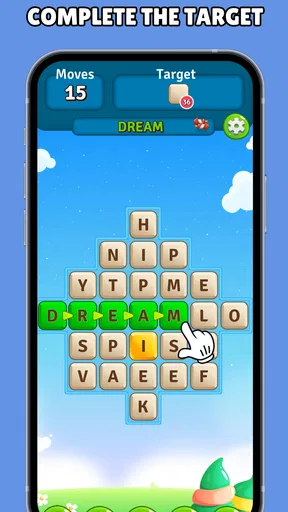
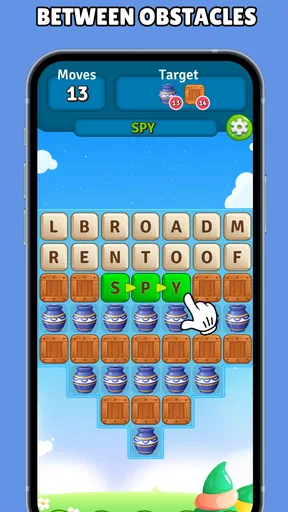
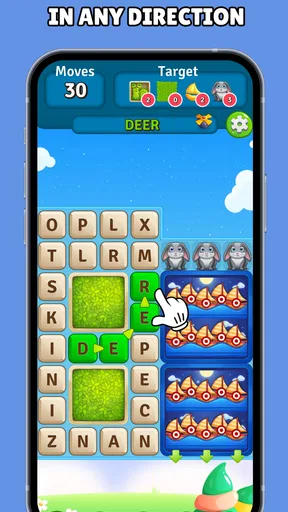
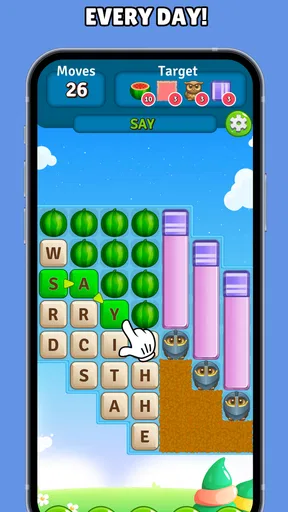
Our Review of Alphabet Scape: search words
 Analysis by Appyee
I came away from Alphabet Scape with the feeling that it is designed for quiet, low-pressure word play rather than dramatic competition. It is a free word game from Salomo Interiors SL, built around searching for words, and its main appeal is easy to understand: open it when you have a few spare minutes, focus on the letters in front of you, and give your attention a small but pleasant workout. The store summary describes it as a calm way to keep the mind active, and that matches the kind of experience I found most appealing here.
This is not the sort of game I would recommend to someone looking for a story, a large social community, or a demanding puzzle campaign. I would recommend it to people who enjoy word searches but want something more convenient than carrying a puzzle book around. It is also a sensible choice for short sessions because the basic idea is immediately familiar. You do not need to learn a complicated control scheme before you can start looking for words.
How the word-search experience fits into everyday play
The strongest use case is the in-between moment: waiting for an appointment, taking a break from work, or settling down before sleep. I can imagine opening it with no intention of playing for a long time and still getting a useful few minutes from it. That matters with a word game, because the best sessions are often the ones that do not demand a large commitment.
The simple search format also makes the game approachable for a wide range of players. Its content rating is Everyone, so it is positioned as a family-friendly title rather than a game built around mature themes. That does not automatically make it ideal for every child or adult, but it does make the tone easier to recommend in a shared household.
What I like about this kind of puzzle is that it rewards a change in attention rather than speed alone. I usually begin by scanning for obvious horizontal words, then check vertical and diagonal lines, and finally look at the less comfortable directions. That small routine is more effective than dragging my eyes randomly across the board. Players who already enjoy printed word searches will understand the rhythm quickly, while newcomers can build a method without being overwhelmed.
A useful habit is to avoid chasing one difficult word for too long. If a word does not appear after a careful scan, I move to another target and return later. Finding several easier words first gives the board more structure and often makes the remaining search less frustrating. This is a practical difference between playing thoughtfully and simply staring at the screen.
Another tip is to treat the puzzle as a concentration exercise, not just a test of vocabulary. When I slow down and follow a letter pattern in several directions, I notice how easily I skip over words that were visible all along. That makes the game more satisfying than tapping through a list without paying attention. It also explains why the calm presentation is important: the value is in sustained focus, not in constant stimulation.
What the free download really means
Alphabet Scape is free to download, which removes the biggest barrier to trying it. The game includes optional in-app purchases ranging from $0.99 to $104.99 per item. That is the spending detail I would pay attention to before handing the device to a child or allowing unrestricted purchases. The existence of a high-priced item does not prove that spending is necessary, but it does mean that “free” should be understood as free entry rather than a promise that every possible convenience costs nothing.
For my own approach, I would install it first and play without buying anything. That is the fairest way to judge whether the core word-search loop is enjoyable on its own. I would also check the purchase confirmation settings on the device, especially if more than one person uses the same phone or tablet. This is not a criticism of the puzzle itself; it is simply sensible housekeeping whenever a free game offers optional purchases.
The purchase range also changes how I would recommend it to different people. An adult who is comfortable ignoring optional spending can treat it as a no-cost word game and decide later whether any paid item is worthwhile. A parent should be more deliberate, because a child may interpret an on-screen offer as part of normal play. I would not promise that every useful element is available without payment, since the purchase structure alone does not establish that. I would judge the free experience directly before making that claim.
Progress without turning the session into a chore
Word-search games can create two very different kinds of progress. One is satisfying: learning to scan more efficiently and spotting patterns faster. The other is artificial pressure, where the player feels pushed to continue because missing a puzzle seems like falling behind. Alphabet Scape works best for me when I focus on the first kind. I do not need to turn every board into a race.
If you prefer a clear sense of achievement, completing one puzzle at a time gives the game a natural stopping point. That is useful for people who want a small daily activity rather than an endless game that keeps demanding attention. On the other hand, players who need increasingly complex objectives, a strong narrative reason to continue, or visible competition may find the format too restrained.
My advice is to decide what “success” means before starting a session. It might be finishing a board, finding words without hints, or simply spending ten focused minutes away from social feeds. Setting that personal target prevents the game from becoming a vague time sink. It also makes the calm design work in its favor: the experience can be relaxing without being completely passive.
There is a trade-off here. A gentle word search is easier to pick up than a demanding vocabulary game, but it may offer less variety for experienced puzzle fans. Someone who wants to learn definitions, build an anagram vocabulary, or compete against a clock may prefer a crossword, an anagram game, or a daily word challenge. Those alternatives usually create stronger pressure or deeper language tasks. Alphabet Scape is better suited to visual searching and relaxed concentration.
I would also avoid judging my performance by speed. Word searching depends on visual habits, screen size, fatigue, and how familiar the target words feel. A slower session is not necessarily a poor one. In fact, the game is more appealing when I use it as a break from hurried tasks instead of adding another deadline to the day.
Fairness, competition, and the role of spending
The question of competitive fairness is slightly different here from what it would be in a multiplayer battle game. The central activity is finding words, so the important issue is whether optional purchases change the pressure placed on the player. I would not assume that purchases create an unfair advantage, because there is no basis for claiming a particular competitive system. I would simply approach the game as a primarily personal puzzle experience and keep spending separate from the satisfaction of solving a board.
That distinction matters. In a competitive title, a paid advantage can affect other players directly. In a solitary word search, the more immediate concern is whether a player feels nudged to pay to avoid frustration or continue comfortably. Since the purchase options cover a broad range, I would watch for that feeling during play rather than treating the free label as a complete description of the experience.
My practical rule is straightforward: if I can enjoy the search, stop when I want, and return later without feeling punished, the free version is doing its job for me. If progress starts to feel dependent on buying something, I would reconsider whether this is the right word game. That is a personal spending boundary, not a claim about a specific mechanic.
Compared with a paid puzzle book, a free mobile game is more convenient and easier to try, but it may also present purchase prompts or a different sense of ownership. Compared with a subscription-based word app, Alphabet Scape may appeal to someone who wants to avoid committing to a recurring payment, while the subscription alternative may offer a broader collection or more structured content. I would choose based on whether convenience, variety, or spending control matters most to me.
The rating gives the game a useful first impression: it holds a 4.4 average from around 865 ratings, alongside roughly 180 written reviews. That suggests many players have found it worthwhile, but I would still read recent comments before making a purchase decision. A rating can tell me that the general experience is landing well; it cannot tell me whether the current balance of free play and optional spending suits my own expectations.
Who should try it, and who should skip it
I think Alphabet Scape is a good match for casual word-game players, adults who want a quiet mental break, and families looking for an accessible title with an Everyone age rating. It is especially suitable if you enjoy finding hidden words more than constructing answers from clues. The game’s compact premise makes it easy to explain to someone else, which is helpful when introducing a parent or relative to mobile puzzles.
It is less suitable for players who need a strong competitive ladder, live interaction, elaborate rewards, or a story-driven reason to keep playing. I would also skip it if my main goal were serious vocabulary study. Searching for words can sharpen attention, but that is not the same as learning meanings, spelling rules, or language usage in a structured way.
People who are sensitive to purchase prompts should take a cautious approach. I would install it, explore the free play, and decide whether the game remains enjoyable when I ignore optional items. That test is more useful than assuming either that every free game is generous or that every purchase option is intrusive.
Device compatibility is reasonably broad for an older phone or tablet, since the minimum operating system is Android 7.1. The current version is 12.505, so I would make sure the device is running a supported system before expecting to install it. I would also keep the app updated through the normal store process, because word games can benefit from maintenance even when their basic idea stays simple.
What I would check before settling in
One question many readers will have is whether the game suits short sessions. In my view, yes: the word-search format naturally breaks into small attempts, and you can stop after completing a puzzle rather than committing to a long campaign. If you prefer a single daily challenge with a fixed routine, another word app may feel more focused, but Alphabet Scape is more flexible as a casual time-filler.
Another question is whether it is suitable for children. The Everyone rating supports a family-friendly starting point, but I would still supervise purchases and consider the child’s reading ability. A rating does not guarantee that every word will be equally easy or that every child will find the visual search comfortable. For a young player, I would play alongside them first and see whether the board size and vocabulary feel manageable.
Readers may also wonder whether they need to spend money to enjoy it. I would not spend immediately. The free download gives enough reason to test the central activity, while the optional items should be treated as a separate decision. If the basic searching is already satisfying, there is no need to turn a short relaxation game into an impulse purchase.
A further concern is whether it replaces crossword or anagram apps. I would say no, but it can complement them. Crosswords ask me to interpret clues and retrieve answers; anagrams make me manipulate letters; Alphabet Scape asks me to detect words hidden in a visual grid. They exercise different habits. I would choose this game when I want visual focus without having to solve a clue or produce an answer from memory.
Finally, I would ask whether its calm style means it lacks challenge. That depends on the player. For a newcomer, scanning in multiple directions can be surprisingly absorbing. For an expert word-puzzle fan, the main challenge may become repetitive if the game does not provide enough variation for their taste. I would therefore try it as a relaxed companion rather than expecting it to replace every other word game on my phone.
My trust verdict after using it
Salomo Interiors SL has made a straightforward free word game that is easy to understand and easy to fit into ordinary life. Its strongest quality is not spectacle; it is the clean idea of looking carefully, finding words, and giving the mind a calm task. The 10K+ install level shows that it has reached a modest but real audience, while the 4.4 average indicates a generally positive reception.
I trust it as a low-commitment game recommendation, with one important qualification: I would be open about the optional spending. The available purchases run from $0.99 to $104.99 per item, so I would not describe the experience as financially risk-free for every user. I would recommend trying the free version, setting purchase controls, and deciding based on actual enjoyment rather than on pressure to unlock a better session.
My bottom line is simple: choose Alphabet Scape when you want a quiet visual word puzzle, not when you want a competitive vocabulary system. It works well for breaks, relaxed evening play, and anyone who likes the familiar satisfaction of spotting hidden words. It is not the right choice for players seeking deep language lessons, multiplayer rivalry, or a story with major progression. For the right audience, though, its modest scope is also its advantage: I can open it quickly, focus for a while, and put it down without the game needing to become the main event.
Verdict
Strengths of Alphabet Scape: search words
- Simple word-search gameplay that is easy to learn and play casually.
- Alphabet-themed puzzles offer a pleasant change from standard word games.
- Short levels make it convenient for quick sessions on mobile.
- Helpful hints can assist when a puzzle becomes difficult.
- Suitable for players who enjoy vocabulary and observation challenges.
Limitations of Alphabet Scape: search words
- Some puzzles may feel repetitive after extended play sessions.
- Difficulty can vary noticeably between consecutive levels.
- Hint availability may limit progress if you are stuck frequently.
- Small screens can make longer word searches harder to scan.
- Players seeking competitive multiplayer features may find it limited.
Similar Picks in This Category
View All
Word Search - Word Puzzle Game
Bluetile4.8

Word Search Quest - Puzzles
Blackout Lab4.8

CodyCross: Crossword Puzzles
Fanatee, Inc.4.7

Words of Wonders: Crossword
Fugo Games4.9

Wordscapes: Word puzzle game
PeopleFun4.7

Word Search Explorer
PlaySimple Games4.9
Frequently Asked Questions
What is Alphabet Scape: Search Words, and how does the game work?
Alphabet Scape: Search Words is a relaxing word-search puzzle game built around finding hidden words in letter grids. After starting a level, you scan the board horizontally, vertically, and diagonally to identify the target words shown on the screen. As you progress, puzzles generally become more challenging, making the game suitable for short sessions as well as longer vocabulary-focused play.
Is Alphabet Scape: Search Words free to download and play?
The game can generally be downloaded and played without an upfront purchase, although the exact availability and payment model may depend on whether you use Android or iOS. Free versions of word-puzzle games commonly include advertising, optional in-app purchases, or both. Before installing, check the store listing for current details about ads, premium features, and any available purchase options.
Does Alphabet Scape: Search Words require an internet connection?
Many word-search levels can usually be played offline once the game has been installed, which makes it convenient for travel or areas with limited connectivity. However, an internet connection may still be needed for advertisements, rewarded hints, updates, cloud synchronization, or certain online features. Availability can vary by version, so test the game offline after installation if this is important to you.
Is Alphabet Scape: Search Words appropriate for children and beginners?
The simple word-search format makes Alphabet Scape accessible to beginners, casual players, and people who enjoy vocabulary exercises without complicated controls. Children may also find it approachable, but parents should review the game’s age rating, advertising content, privacy information, and possible in-app purchases before allowing unsupervised play. Difficulty and vocabulary may vary between levels.
Are there hints, difficulty increases, or ways to make progress easier?
Word-search puzzles can become difficult when words are hidden among similar letters or placed in less obvious directions. Alphabet Scape: Search Words may provide assistance such as hints, depending on the current version and level design. Players should expect the challenge to increase over time and can improve by scanning systematically, checking every direction, and saving hints for genuinely difficult boards.
Play our best games!


